What is the GNU General Public License v3.0 in Simple Terms?
Have you ever bought a piece of furniture, brought it home, and realized the manufacturer made it impossible to open or repair without breaking it? Software can feel the exact same way—unless it comes with a special kind of freedom protected by the GNU General Public License v3.0 (GPLv3).
What is the GNU General Public License v3.0?
The GNU General Public License v3.0 (GPLv3) is a popular open-source software license. In plain English, it is a legal rulebook that code creators use to ensure their software remains free for everyone to use, study, share, and improve—forever.
Unlike traditional software licenses that restrict what you can do (think of the long legal agreements you click "I Agree" on without reading), the GPLv3 is designed to protect your rights as a user and developer.
The Cookie Recipe Analogy: How GPLv3 Works
To understand GPLv3, imagine you attend a neighborhood bake sale and buy a delicious cookie.
1. Proprietary Software (The Secret Recipe)
In a standard commercial store, you get the baked cookie, but the baker keeps the recipe locked in a safe. You cannot see the ingredients, you cannot tweak the flavor, and you certainly cannot bake and sell those cookies yourself.
2. Open Source (The Shared Recipe)
Now imagine a friendly neighbor gives you a cookie along with the full recipe card. You can read the recipe, see how it’s made, and even swap out chocolate chips for nuts if you prefer.
3. Copyleft and GPLv3 (The "Pass It On" Rule)
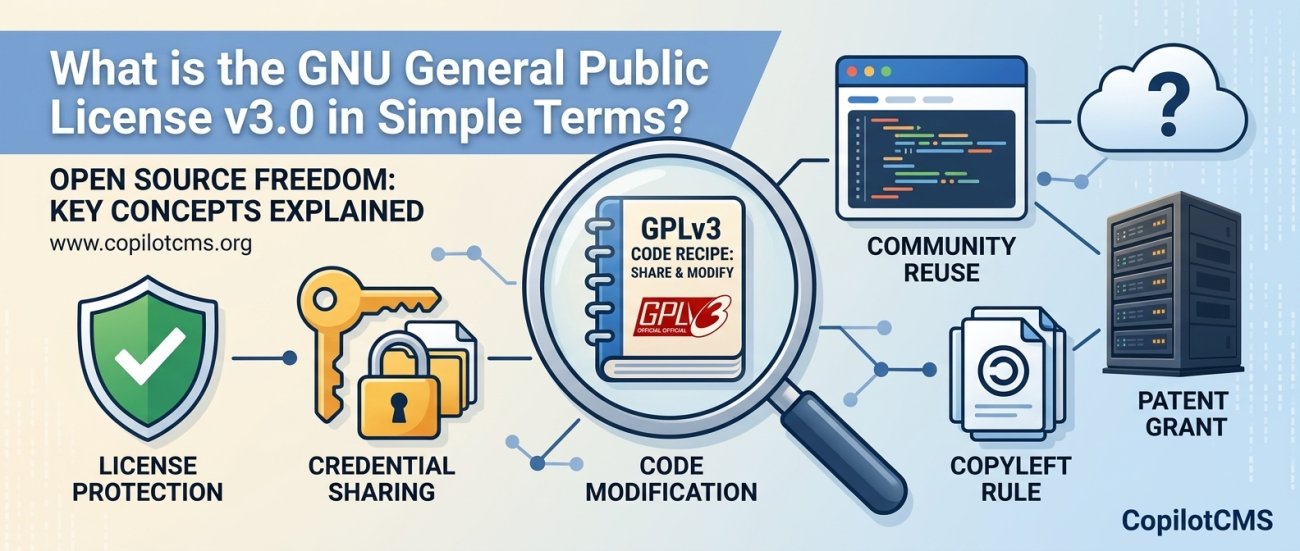
This is where GPLv3 comes in. GPLv3 adds one major rule to the shared recipe card: If you modify this recipe and share your improved cookies with others, you MUST also share your modified recipe card under the exact same open rules.
You are not allowed to take the shared recipe, tweak it slightly, and then hide the new recipe behind a secret safe. This concept is called "Copyleft"—using copyright law to ensure information stays open rather than restricted.
Key Features of Version 3.0 (GPLv3)
The original GPL license was created in the late 1980s, but technology evolved, leading to version 3.0 in 2007. GPLv3 added important protections for the modern digital age:
- Anti-Tivoization Protection: "Tivoization" happens when a company puts open-source software inside a physical device (like a smart TV or digital video recorder) but locks the hardware so you cannot install your own modified software. GPLv3 prevents companies from doing this.
- Patent Protection: If someone contributes code to a GPLv3 project, they automatically grant everyone using the software a free license to use any patents attached to that code. This prevents companies from suing users over patent claims later.
- International Compatibility: GPLv3 was written to work smoothly with copyright laws across different countries around the globe.
Why GPLv3 Matters to You
Even if you never write a line of code in your life, GPLv3 impacts your daily digital world:
- It Keeps Software Honest: When software code is open under GPLv3, independent experts can inspect it to verify that it isn't secretly spying on users or collecting unnecessary personal data.
- It Prevents Monopolies: Tech giants cannot take GPLv3 community projects, close them off, and force everyone to pay subscription fees to access future versions.
- It Powers Tech You Use Daily: Many essential systems, tools, and popular applications run on software protected by GPL licenses, keeping the digital foundation of the web accessible to all.
The Takeaway
The GNU General Public License v3.0 (GPLv3) is essentially a digital bill of rights for software. By enforcing the rule that shared code must always remain open—even when modified—GPLv3 guarantees that technology remains a collaborative resource built for everyone, rather than a locked secret controlled by a few.